⏤ The Recipe
Pork Soup Dumplings.
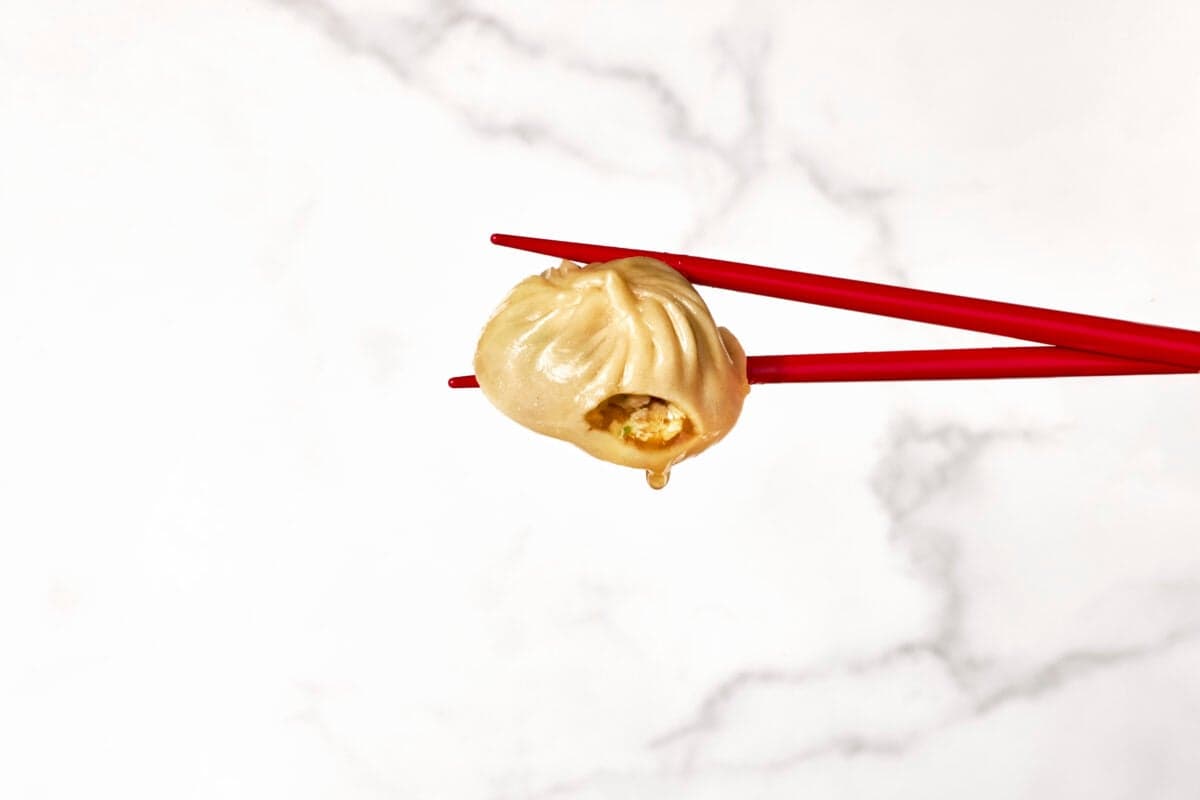
Learn how to makepork soup dumplings(xiao long bao) using the traditional method I was taught in Shanghai, China. Filled with savory pork and rich homemade broth, each delicate dumpling bursts with hot, flavorful soup the moment you bite in. The result is an irresistible combinat…
Prep
1h
Cook
3h
Total
10h
Serves
25 dumplings
⏤ The Story
Learn how to makepork soup dumplings(xiao long bao) using the traditional method I was taught in Shanghai, China. Filled with savory pork and rich homemade broth, each delicate dumpling bursts with hot, flavorful soup the moment you bite in. The result is an irresistible combination of flavors and textures that keeps you coming back for more.
Soup dumplings, known as xiao long bao, are delicate Chinese dumplings filled with seasoned pork and hot, savory broth. Unlike other dumplings, the soup isn’t added as liquid. Instead, it starts as a gelatin-rich pork stock that melts during steaming, creating the signature pocket of flavorful broth inside each dumpling.
I first learned about soup dumplings while working in a Michelin-star restaurant, where I was responsible for mixing and portioning the filling each day. Later, I became even more familiar with them while eating my way through Shanghai, where they’re a beloved daily staple.
Originating in Shanghai’s Jiangnan region, soup dumplings are traditionally steamed in bamboo baskets and served with black vinegar and slivered ginger. With their delicate wrappers, juicy pork filling, and soup-filled centers, they’re one of the most iconic dumplings in the world and easily one of my favorite recipes to make at home.
⏤ The Method
Step by step.
Make the Broth Jelly (Traditional Method)
- 1
Add pork skin and pork bones to a large stock pot. Cover with water and bring to a boil.
- 2
Discard the blanching water and rinse the pork skin and bones thoroughly to remove the foamy scum.
- 3
Use a chef’s knife to scrub any attached fat from the pork skin, and cut the skin into thin strips.
- 4
In a clean pot, combine five cups (one point two liters) of water, pork skin, bones, ginger, scallions, Jinhua ham, Shaoxing wine, and star anise.
- 5
Bring to a boil, then reduce to the lowest simmer. Cook for three hours or until the broth turns milky and creamy.
- 6
Strain through a sieve. Reduce to about one and three fourths cups (420 milliliters / 420 grams) on the stove if needed. Add water if needed to reach one and three fourths cups (420 milliliters).
- 7
Chill the broth in the fridge for at least six hours or until it is completely set.
- 8
Working quickly, finely mince the broth jelly and return it to the fridge.
Shortcut Broth Method (Skip if making traditional broth)
- 1
Warm the stock slightly on the stovetop.
- 2
Whisk in the gelatin and salt until dissolved.
- 3
Refrigerate until fully set (about four to six hours).
- 4
Cube the broth, and chill in the fridge.
Prepare the Dough
- 1
Add flour and salt to a stand mixer fitted with a dough hook. Gradually add the hot water, mixing with chopsticks or a spatula until a shaggy dough forms. Continue to mix until the liquid is mostly absobred.
- 2
Cover the dough, and let it rest at room temperature for ten minutes.
- 3
Turn the stand mixer on medium, and knead the dough for five to ten minutes or until it is very soft and smooth. The dough should not be sticky!
- 4
Cover the dough tightly with plastic wrap or a damp cloth, and rest for 60 minutes. This second rest is crucial for creating an elastic dough that can be rolled thinly without tearing.
- 5
Shape the rested dough into a long, even roll (about one inch or two and a half centimeters in diameter). Divide the roll into 20 to 25 equal-sized pieces weighing roughly 14 grams each.
- 6
Place the dough pieces under a damp cloth or plastic wrap to prevent them from drying out.
- 7
Take one dough piece, and flatten it into a disc.
- 8
Use a small rolling pin to roll out the dough disc into a thin, round wrapper, about three to four inches in diameter. Use the “roll-and-turn” technique: roll the dough forward with one hand while turning it with the other. The goal is to create a wrapper with a thicker middle and thinner edges.
- 9
As soon as the wrapper is rolled out, place 18 to 25 grams of filling in the center, and begin pleating. (See steps below)
Make the Filling
- 1
In a bowl, mix all ingredients for the filling together, except the gelatinized broth.
- 2
Knead the mixture vigorously until a smooth paste forms.
- 3
Gently fold in the gelatinized broth/aspic to prevent it from breaking apart.
Shape and Fill the Dumplings
- 1
Work with one wrapper at a time and keep the rest covered with a damp towel. Roll the dough into a disc, and place it in the palm of your non-dominant hand, letting it gently cup into a shallow bowl.
- 2
Spoon a rounded tablespoon of well-chilled filling into the center. It should look generous without overfilling.
- 3
Using your thumb and forefinger, pinch a small section of dough at the edge to create your first pleat. With your other fingers supporting the filling, fold the next section of dough over itself, slightly overlapping the first pleat. Think tight, tidy folds rather than big ruffles.
- 4
Continue pleating in one direction, rotating the dumpling in your hand as you work. The pleats should gather naturally toward the top. Aim for 18 pleats, it’s the lucky number.
- 5
When you’ve circled all the way around, bring the final pleat to meet the first. Gently press and pinch the gathered top to close completely, giving it a twist to secure. There should be no visible gaps.
Cook the Dumplings
- 1
Line a steamer with parchment or cabbage.
- 2
Bring an inch of water to a simmer in a large pot, and fit the steamer on top.
- 3
Add the dumplings, leaving space between each piece. Don’t thaw if frozen.
- 4
Steam the dumplings for six to eight minutes if fresh and eight to twelve minutes if frozen.
- 5
Cool slightly, and enjoy warm.
⏤ Chef's Notes
*Adjust the ingredient amounts in the recipe instructions accordingly if doubling or tripling the recipe.Storage:– Store uncooked dumplings in a single layer on a parchment-lined tray in the freezer until solid, then transfer to an airtight container or freezer bag for up to three months. Steam directly from frozen.– Store cooked dumplings in an airtight container in the refrigerator for up to two days.– Reheat by steaming for three to five minutes until heated through. Store extra broth jelly separately in the refrigerator for up to four days.
⏤ Cook Next