⏤ The Recipe
Poached Eggs.
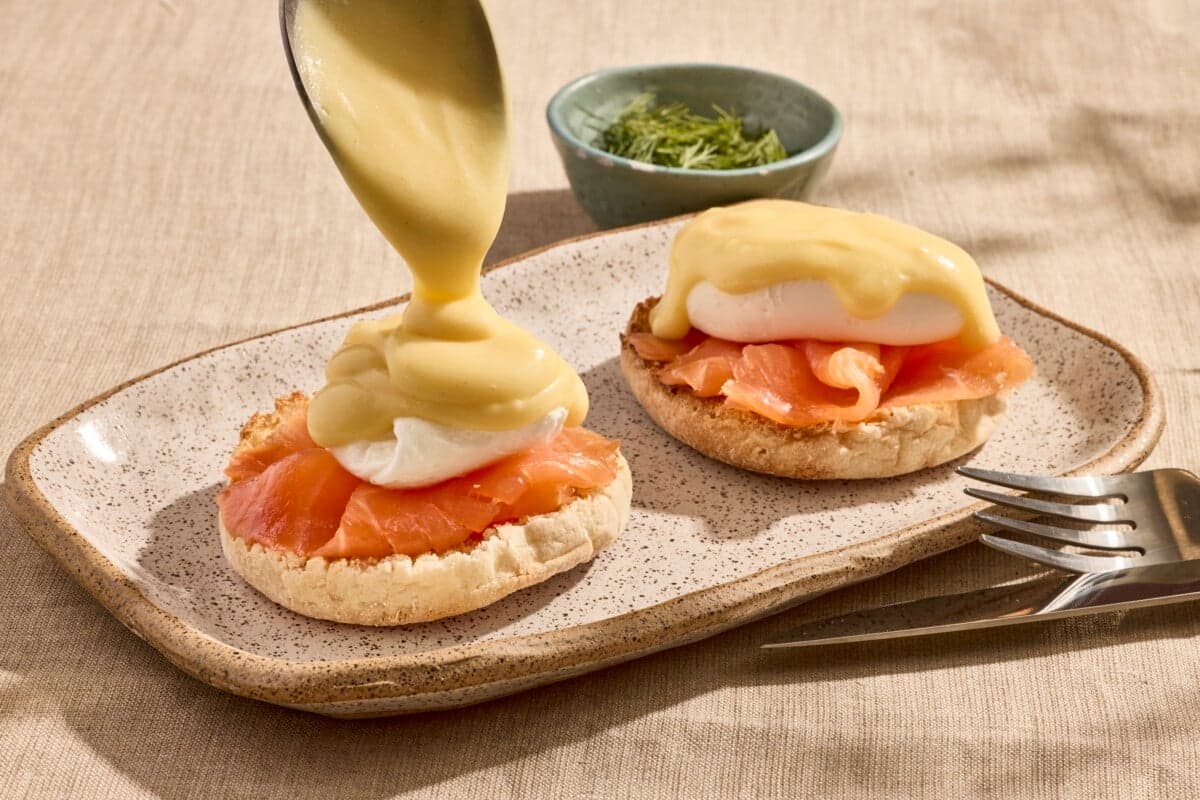
Learn how to make aneasy poached eggs recipeand achieve soft whites and a runny yolk every time. With my tips and tricks, you’ll master this simple art and be on your way to enjoying a perfect breakfast.
Prep
5m
Cook
4m
Total
9m
Serves
3
⏤ The Story
Learn how to make aneasy poached eggs recipeand achieve soft whites and a runny yolk every time. With my tips and tricks, you’ll master this simple art and be on your way to enjoying a perfect breakfast.
If you’ve never attempted poached eggs before, don’t be intimidated. It’s fairly easy to do and is a lot more impressive than serving a plate of basic scrambled eggs. Over the years, I’ve tested various methods, determining the best option and simplifying the process. Now, I’m sharing my exact process along with all my tips and tricks.
See the recipe card below for the complete ingredients list and instructions.
Before you begin, make sure you’re using fresh eggs. This is a key component when it comes to making the perfect poached eggs. Fresh eggs have firmer whites that hold their shape, making it easier to achieve a soft yolk and spherical shape.
⏤ The Method
Step by step.
- 1
Set a fine mesh sieve over a small bowl, and crack an egg over the fine mesh sieve. Straining the egg through a sieve removes the loose whites, ensuring a neater result. Strain any thin, excess egg white into the bowl and discard.
- 2
Transfer the egg into a small dish, and repeat the process with the other eggs. Set aside.
- 3
Bring a large saucepan of water to a boil and add the vinegar. Then, using a large spoon, quickly stir the water so a vortex appears in the water.
- 4
While the water is still circulating, gently tip the eggs into the water, stirring gently if needed to maintain the vortex. Cook for three to four minutes, or until the whites are fully set, but the yolk is still runny.
- 5
Remove the eggs using a spider or a slotted spoon.
⏤ Chef's Notes
Use fresh eggs for the best results. To test your eggs’ freshness, place them in a bowl of water. Fresh eggs sink, and older eggs float in the water.Storage:This recipe is best served right away, while the eggs are still warm. However, if needed, you can store leftovers for up to two days. To do so, transfer the eggs to an ice water bath once poached to stop the cooking process. Then, carefully remove them with a spider or slotted spoon and transfer them to an airtight container. To serve, heat your eggs in a small bowl of hot water for about 20 to 30 seconds or just until they’re warm through.
⏤ Cook Next